
Introduction
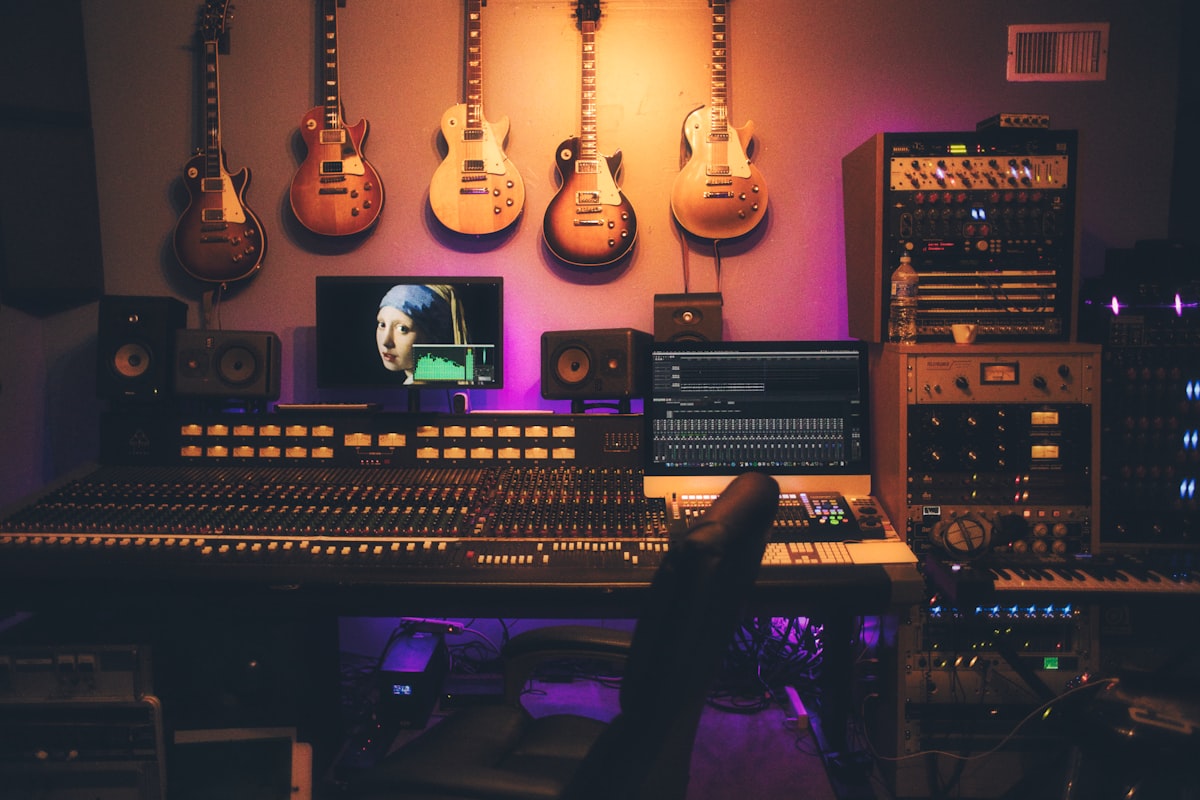
Building a home recording studio is one of the most significant investments a musician or producer can make in their creative life. Having a dedicated space to record and produce music at any hour, without the cost and scheduling constraints of commercial studios, fundamentally changes what’s possible in your creative work. The exciting news: you don’t need to spend tens of thousands of dollars to build a genuinely capable home studio.
In 2025, the technology available to home studio builders is extraordinary. The same fundamental tools that professional studios use — high-quality converters, transparent preamps, excellent monitoring, and powerful DAW software — are available at a fraction of the cost they were a decade ago. With smart choices and clear priorities, you can build a home studio capable of professional-quality recordings for $500-2000 depending on your ambitions.
This guide walks you through every component of a home studio setup, from the room itself and acoustic treatment to the core equipment and software you’ll need. We’ll show you where to invest for maximum return and where you can save without compromising quality.
The Room: Acoustic Treatment First
The most important — and most often neglected — element of a home recording studio is the room itself. No amount of expensive gear can compensate for recording and mixing in a poorly treated acoustic environment. Before spending money on microphones and interfaces, invest in making your room sound as good as possible.
Acoustic treatment addresses two main issues: room reflections (which color recordings and make mixing misleading) and low-frequency buildup (which creates boomy resonances that make bass and kick drum management difficult). The most cost-effective DIY treatment uses strategically placed acoustic foam panels ($50-150 for a starter set), bass traps in corners (where low-frequency energy builds up), and diffusers to scatter mid and high frequencies rather than absorbing them.
The ideal home studio room has irregular dimensions (avoid perfect squares or cubes), soft furnishings (carpet, sofas, curtains), and at least partial acoustic treatment on the walls and ceiling. A spare bedroom is often ideal: it’s enclosed, has manageable dimensions, and typically has carpeted floors. A basement can work well if it’s dry, but concrete walls require significant treatment.
The Core Equipment Chain
Every home studio needs four essential components: an audio interface (converts analog signals to digital and back), studio monitor speakers or headphones, a computer running a DAW, and microphones for recording acoustic sources. These four elements are the minimum viable studio.
Audio interface: The Focusrite Scarlett 2i2 (around $170) is the industry’s most popular entry-level interface for good reason — its preamps are clean and quiet, its converters are high-quality, and it’s supremely reliable. For producers who only work with software instruments and don’t need to record acoustic sources, even a basic audio interface is sufficient; the key is low latency and clean conversion.
Studio monitors: Good monitors are crucial for accurate mixing. The Yamaha HS5 ($400/pair), KRK Rokit 5 G4 ($350/pair), and Adam Audio T5V ($350/pair) are all excellent choices in the budget range. Position them at ear height, forming an equilateral triangle with your listening position, and angle them toward your ears. If budget is tight, quality open-back headphones (like the Beyerdynamic DT 990 Pro or Sennheiser HD 650) can serve as a mixing reference.
Microphones and the Complete Setup
For recording vocals, acoustic guitar, and other acoustic sources, a large-diaphragm condenser microphone is the standard choice. The Audio-Technica AT2020 ($100), Rode NT1 ($250), and AKG C214 ($300) represent excellent options at different price points. If you record multiple sources simultaneously (live bands, drum kits), you’ll need additional microphones — dynamic mics like the Shure SM57 ($100) and SM58 ($100) are workhorses used in studios worldwide.
Your complete budget studio might look like: acoustic treatment ($150), audio interface ($170), studio monitors or headphones ($350), microphone ($100-250), microphone stand and pop filter ($50), XLR cables ($30), and DAW software ($0-200 depending on choice). Total: approximately $850-1200 for a genuinely capable setup. With this investment, you can produce commercial-quality recordings of vocals, acoustic instruments, and entirely programmed electronic productions.
Frequently Asked Questions About Home Studios
How much should I spend on my first home studio?
A genuinely capable starting setup is achievable for $500-800: a basic audio interface, entry-level studio headphones, a budget condenser microphone, and a free or low-cost DAW. You can expand from there as your needs and budget grow. Don’t overspend before you understand exactly what you need.
Do I need to soundproof my studio?
Soundproofing (preventing sound from entering or leaving a room) and acoustic treatment (improving the sound within a room) are different things. True soundproofing is very expensive and requires structural modifications. For most home producers, acoustic treatment is far more important and practical than soundproofing. Record at reasonable hours and communicate with neighbors if needed.
Mac or PC for music production?
Both work excellently. Mac offers tight hardware-software integration and Logic Pro (a exceptional DAW for $200). PC offers more flexibility, upgradeability, and generally better value for hardware. The choice should be driven by which DAW you prefer, as some major DAWs (Logic Pro, GarageBand) are Mac-exclusive.
Is a standalone recorder better than a computer-based DAW?
For most modern producers, a DAW on a computer offers more flexibility, processing power, and capability than standalone recorders. Standalone recorders have advantages in simplicity and portability but are rarely the right choice for a primary production setup in 2025.
How do I reduce noise from fans and air conditioning?
Turn off HVAC during recording takes if possible. Use a quiet computer (consider passive cooling or external fan management). Keep your audio interface and cable runs away from power supplies and electronics that produce EMI. Record during quiet times if environmental noise is an issue.
Final Thoughts
Building a home studio is one of the best investments a serious musician can make. The creative freedom of being able to record and produce at any hour, in your own space, without the cost and inconvenience of commercial studios, transforms what’s possible in your musical life.
Start with the essentials, treat your room acoustically before adding gear, and let your studio grow with your skills and needs. The journey from bare room to professional-sounding home studio is one of the most satisfying in music production.
Sources & Further Reading
- Sweetwater: Home Studio Setup Guide
- Home Studio Expert: Complete Home Studio Guides
- Recording Revolution: Home Studio Tips and Tutorials

Jake Morrison
professional music producer
Jake Morrison is a professional music producer and recording engineer with over 12 years of experience working in studios across Nashville and Los Angeles. A graduate of Berklee College of Music, Jake has produced and engineered records for independent artists across multiple genres including rock, hip-hop, and electronic music. He writes to help aspiring producers navigate the technical and creative sides of modern music production.